The Piedmont Master Gardeners Association provides science-based gardening information to the community of Albemarle County and the City of Charlottesville. Here you will find our calendar of gardening events, resources to answer your gardening questions, a lively and topical monthly newsletter (The Garden Shed), a list of our projects and community partners, and information on how to become a Piedmont Master Gardener.
 From now through April 30, you may drop off your “Green Elephant” donations at 402 Albemarle Square between 10 a.m. and noon on Wednesdays or Saturdays. To arrange a pickup of large items, contact us at greenelephant@pmgarchives.com. We are not able to accept plastic pots or opened chemicals. The Green Elephants will be offered for sale to the public during PMG’s Spring Plant Sale, from 10 a.m. to 2 p.m. Saturday, May 3, at Albemarle Square Shopping Center. The sale is the primary source of support for the many free and low-cost programs we offer to the community.
Red Imported Fire Ants in Virginia
Question: Red imported fire ants (RIFA) have been reported in southeastern Virginia and some Virginia cities and counties have been placed under quarantine. Are these ants spreading to other areas in the State, including Albemarle County? What do we need…
There are no upcoming events at this time
For more information on any of our events, visit our Events page.

Vascular Streak Dieback: Threat to Redbuds and Dogwoods
You may wonder why you haven’t seen many flowering dogwoods (Cornus florida) or Eastern Redbuds (Cercis canadensis) in local nurseries lately. This is likely due to concern about Vascular Streak Dieback, a fungal infection attacking these and other trees. It has been observed in nurseries in Virginia and other U.S. states (especially Tennessee), and state inspectors have found it in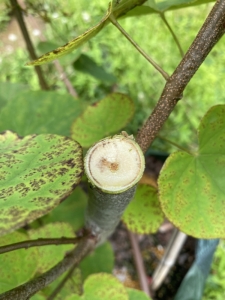 Albemarle County. Nurseries around the country have had to destroy infected inventory.
Virginia Cooperative Extension has issued this fact sheet on the emerging problem (VCE Publication SPES-483P) with photos of symptomatic plants.
Symptoms include leaf yellowing, leaf scorching, wilting and branch death, typically starting at branch ends and progressing toward the trunk. Streaking can be seen in the vascular tissue of infected branches, but this discoloration is often not visible in dogwoods. Researchers report that the disease is evident in seedlings, grafted plants, older nursery stock produced in container or field production settings, and landscape plants. Consumers should not buy trees that show these symptoms or that are grouped with any trees that are symptomatic.
Because the disease appears to affect the vascular tissue (xylem) that draws water and nutrients through the tree, it may spread through grafting, pruning, and budding. Stress factors such as poor site conditions, over-fertilization, drought, pest damage and herbicide exposure have been associated with the disease, so following best practices for planting and caring for trees may reduce their vulnerability. These include maintaining rigorous sanitation standards when grafting and pruning. Clean tools between each cut with 70 percent alcohol or a mixture of one part bleach to nine parts water. Also, follow proper planting procedures to give new trees a healthy start. 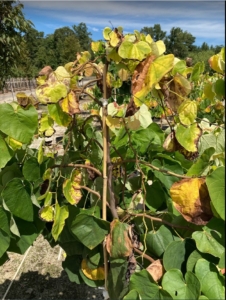
If you suspect Vascular Streak Dieback in a tree on your property, bring a sample to the Virginia Cooperative Extension office at 460 Stagecoach Road in Charlottesville for testing by Virginia Tech’s plant disease clinic. It is imperative that you follow these steps for preparing the sample and that you bring it in on a Monday or Tuesday to ensure it reaches the clinic before the weekend. The charge for in-state residents is $35. If you have questions about submitting a sample, call the VCE office at (434) 872-4580, or write directly to the clinic at clinic@vt.edu.
Photos courtesy of the Virginia Department of Agriculture and Consumer Services.